
Montessori Inspiration Conference 2026
Adult and Environment: A Space Where Freedom Meets Responsibility
Where? Tallinn Zoo, entrance from the Ehitajate tee 150
When? 10.–11.04.2026
Tickets:
Two-day ticket 99 euros (from 01.04 at the price of 119 euros)
One-day ticket 69 euros (from 01.04 at the price of 79 euros)
The ticket includes coffee breaks and lunch.
The focus of the Inspiration Conference 2026 is on the role and influence of adults and the environment in supporting a child’s development and learning. At different stages of development, a child needs a different physical and socio-emotional environment, which can be shaped by a prepared adult who has a thorough understanding of the child’s development. In addition to theory and Montessori philosophy, adults are also guided by practical skills such as child observation, didactic preparation, supporting a child’s self-regulation through boundaries and offering autonomy.
The conference program covers these topics and provides insight into different age groups.
Among the international speakers, Montessori Teacher Trainers Elina Rautasalo (3–6, Finland/Czech Republic), Bo Mynett (6–12, Netherlands) and Karl Bruun (12–18, Norway) will share their experiences and knowledge. Merike Safka from the USA will bring her long-term teaching experience to the conference. Grete Arro and Triin Ulla will add a researcher’s perspective. Montessori guides Ruth Maria Roosi-Ott (3-6) and Eliisa Silmet (0-3) will bring valuable experience to the workshops.
In addition to the conference keynote presentations, there will be workshops for smaller groups in both days.
Friday, April 10, 2026
11:15-12:00 Gathering and the book “Maria Montessorilt lapsevanematele” presentation
12:00-12:50 Opening of the conference with a panel discussion – “From Maria Montessori to Parents” (The panel discussion is in Estonian language)
The conference will feature the presentation of the first Maria Montessori book in Estonian. “Maria Montessori speaks to parents” is a collection from the internationally recognized “The Montessori Series”, in which Dr. Maria Montessori reveals the foundations of her educational philosophy specifically from the perspective of a parent. Montessori pedagogy has always focused on an informed and prepared adult, which is why the author considered it important to speak to parents in addition to teachers, offering them a scientific insight into the psychology of child development. The newly published Estonian book is entitled “Maria Montessorilt lapsevanematele”. The work has been translated by Ruth Maria Roosi-Ott, edited by Brita Kaasik.
Panelists:
Ruth Maria Roosi-Ott – book translator, Montessori guide (3-6) and parent
Asnate Tuulik – “Montessori Estonia” podcast host and parent
Merike Safka – Montessori instructor (3-6, 6-12) and parent
Madli-Mai Norma – parent
Moderator: Marin Järvpõld – Tartu community leader and parent
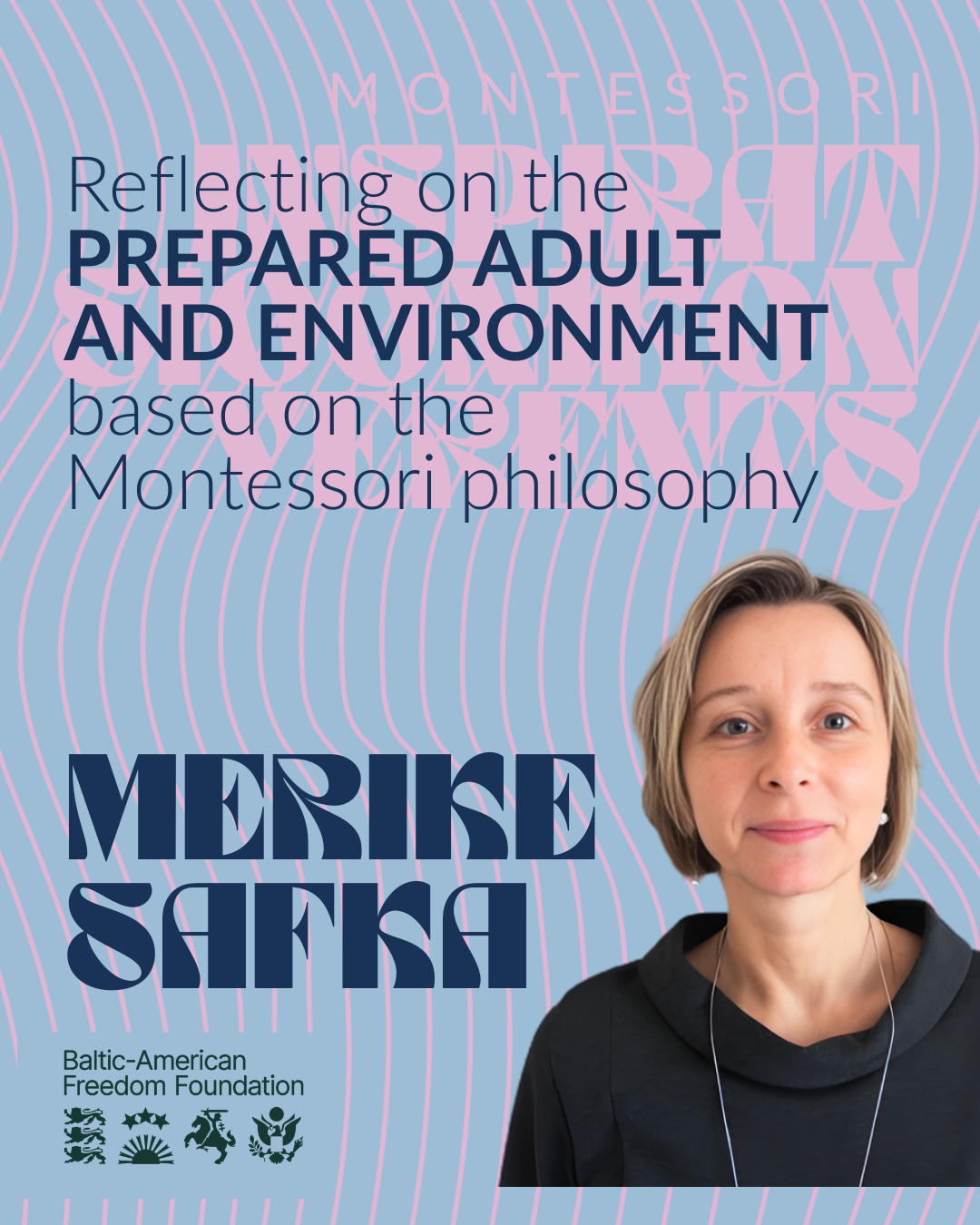
13:00-14:00 Merike Safka – Reflecting on the prepared adult and environment based on the Montessori philosophy (The presentation will be interpreted into English)
Merike is a Montessori guide from Estonia who has been working in the US for the past 20 years with children in both the 3–6 and 6–12 age groups.
Maria Montessori saw education not as memorizing facts, which in today’s world are always within reach, but as a way to awaken and activate a child’s inner desire to learn. To do this, you need a knowledgeable adult next to the child, who knows the child’s developmental needs and prepares an environment that supports independent learning. In her presentation, Merike will provide a comprehensive overview of the principles that Montessori has described as important in her methodology, talking about two pillars – the adult and the environment.
This program is made possible by funding from the Baltic-American Freedom Foundation (BAFF).
14:00-15:00 Lunch break
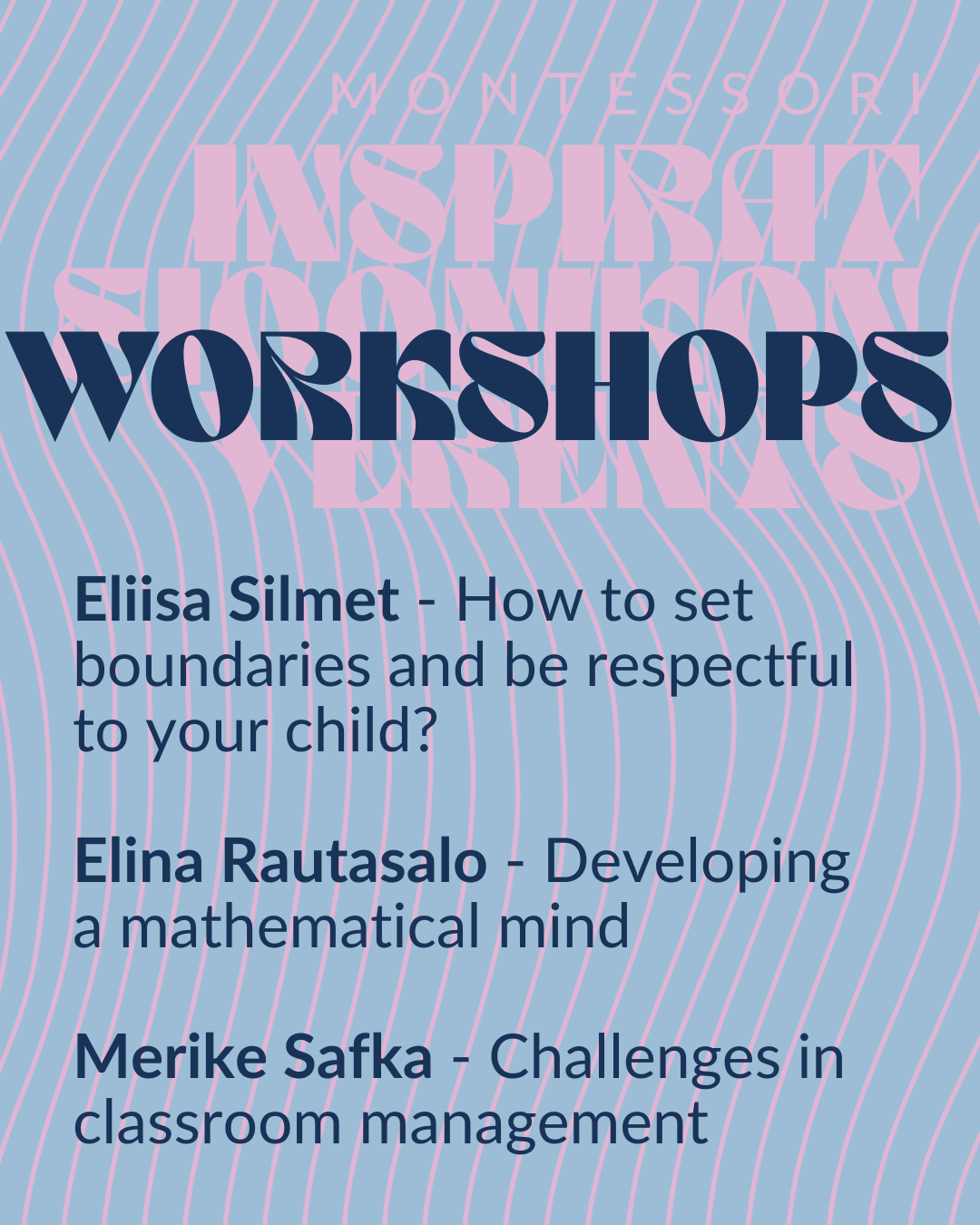
15:00-16:00 Workshops
Workshops take place simultaneously in different rooms:
- Eliisa Silmet – How to set boundaries and be respectful to your child? (The workshop is in Estonian language)
Montessori 0-3 guide Eliisa will share tools for respectfully setting boundaries with young children. We will discuss how boundaries make a child’s environment safer and why it is important that an adult knows why and how to set boundaries. - Elina Rautasalo – Developing a mathematical mind (The workshop is in English language)
Elina, a Teacher Trainer for Montessori 3-6 guides, will open up the goals of learning materials for the 3-6 age group and their connection to the development of mathematical competence in preschool age through practical activities. Practical life activities, sensorial and mathematical materials help build systematic knowledge and create a foundation for school-level mathematics. - Merike Safka – Challenges in classroom management (The workshop is in Estonian language)
The workshop is intended primarily for Montessori guides in the 3-6 and 6-12 age groups.
In a Montessori environment, an adult works quietly in the background: he or she guides, not directs; observes, not constantly intervenes. Our way of working is based on attentive non-intervention: we create conditions, provide materials and presentations, and then let the children direct their own learning. In the workshop, we discuss what daily challenges working with children presents to adults in a class environment and how to reach workable solutions.
16:00-16:30 coffee break
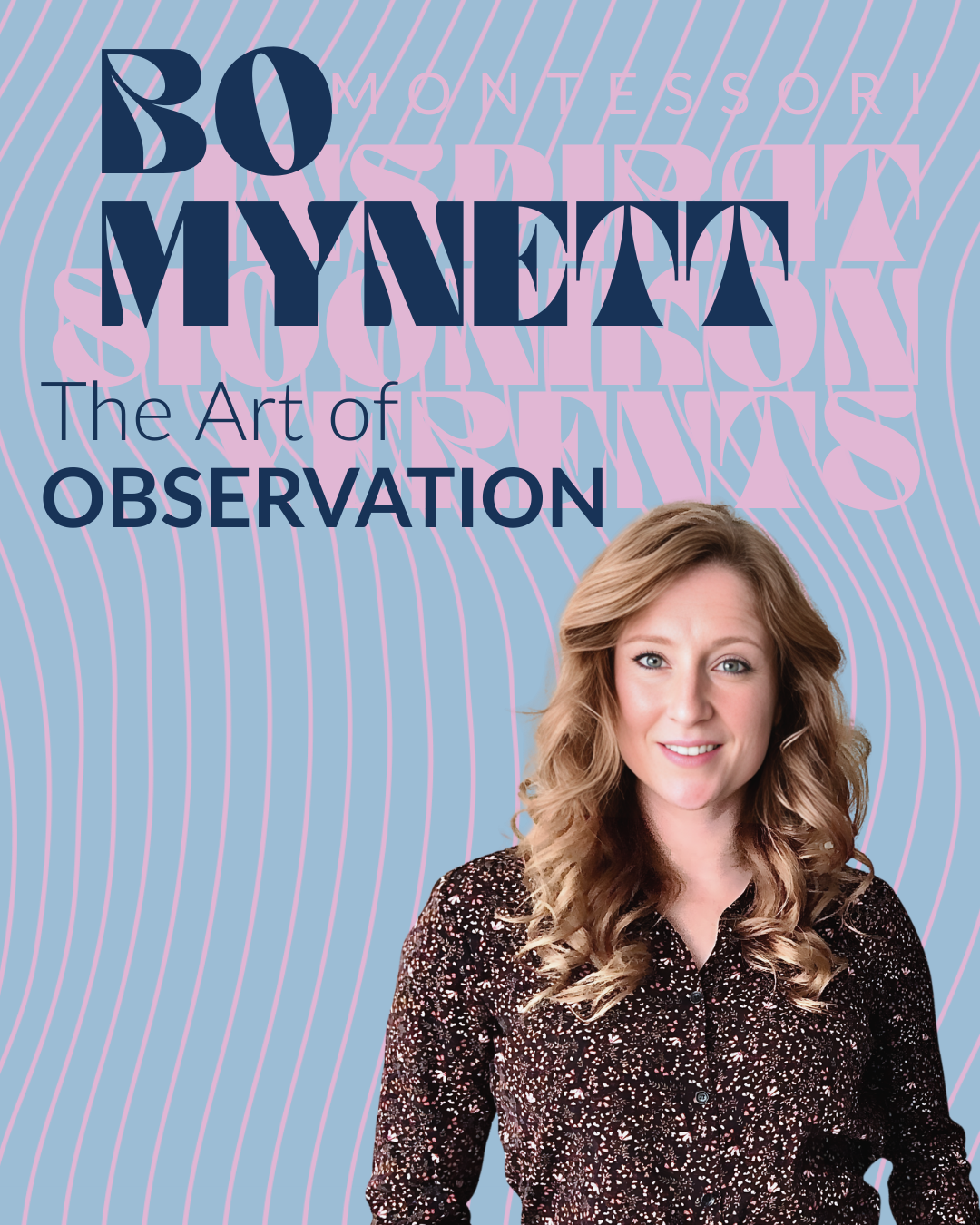
16:30-17:30 Bo Mynett – The Art of Observation (The presentation is in English language)
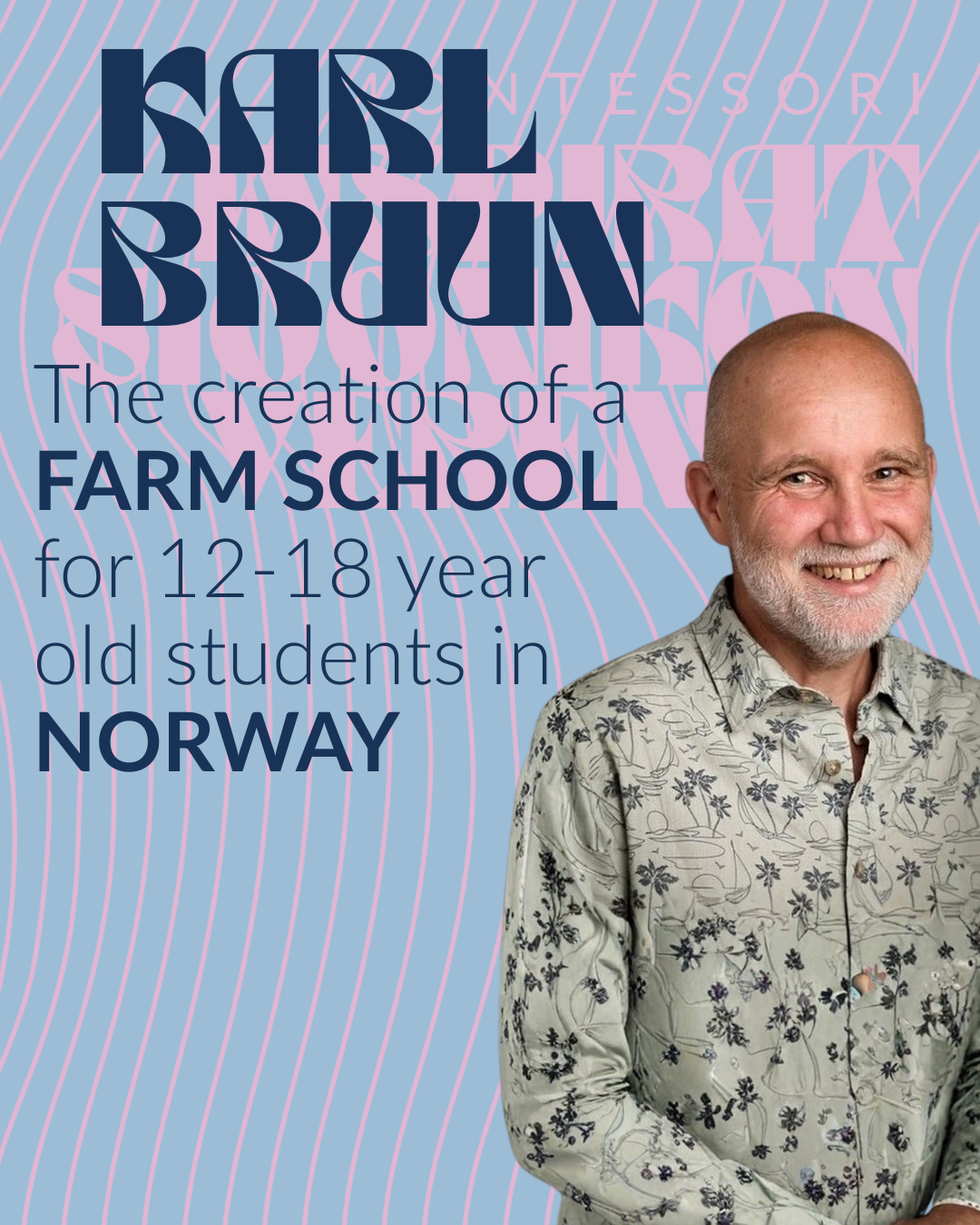
17:30-18:30 Karl Bruun – The Story of the Farm School in Norway: The creation of a farm school for 12-18 year old students in Norway (The presentation is in English language)
The story of the creation of a school is opened through the perspective of a prepared environment and the needs of young people – in Karl’s presentation, theoretical principles meet everyday practice. How and why did the school come about and what have been the challenges and joys on this journey? How is a slightly different approach in line with the Norwegian educational framework and curriculum? Karl Bruun, the creator of the school, shares his long-term experience, who in addition to working with young people is also a trainer of Montessori guides.
Saturday, April 11, 2026
9:45-10:00 Gathering
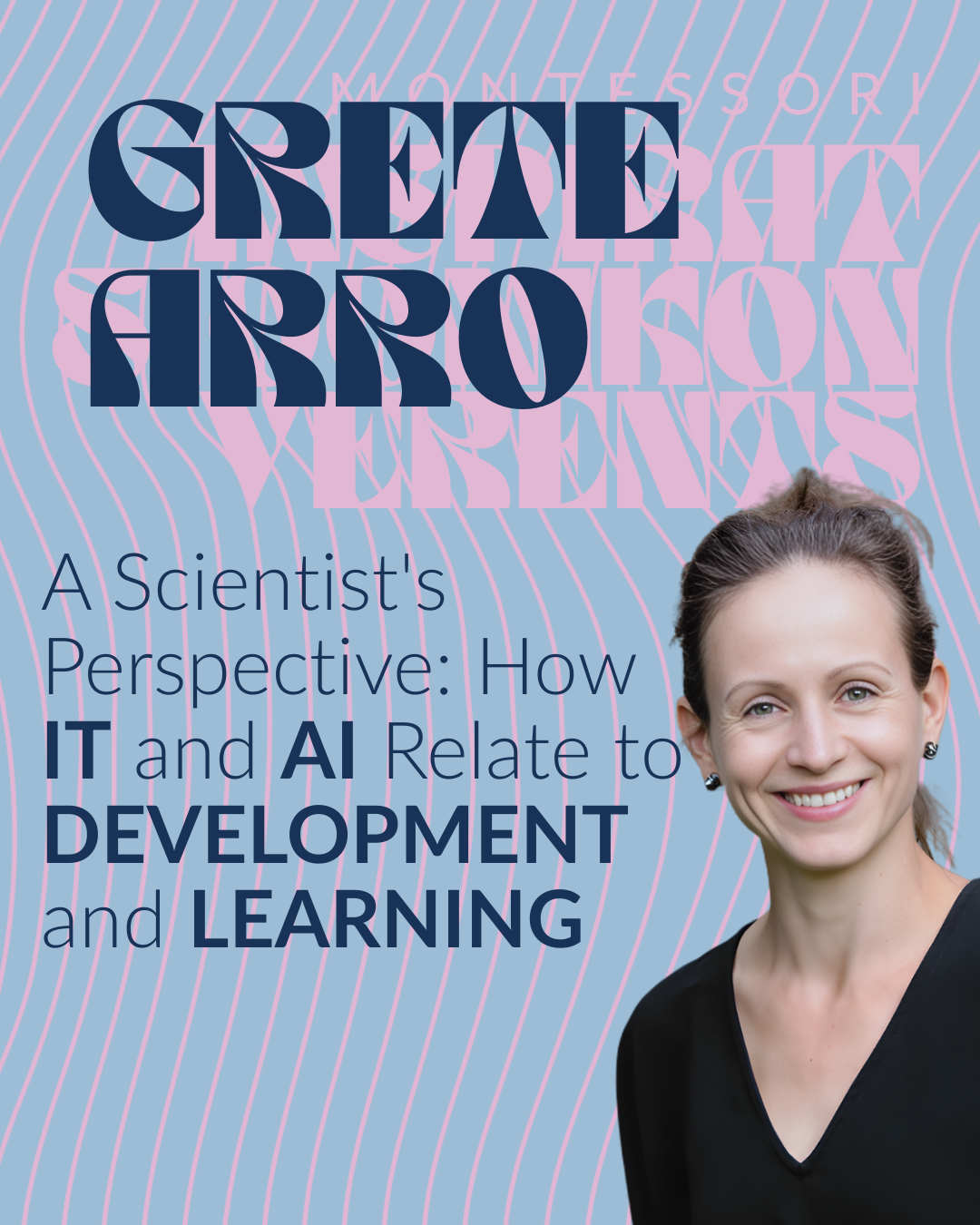
10:00-11:00 Grete Arro – A Scientist’s Perspective: How IT and AI Relate to Development and Learning (The presentation is in Estonian language)
Educational psychologist Grete Arro opens a scientific view of digital threats and opportunities, where artificial intelligence and smart devices fit into a child’s development and what are the connections to learning and well-being.
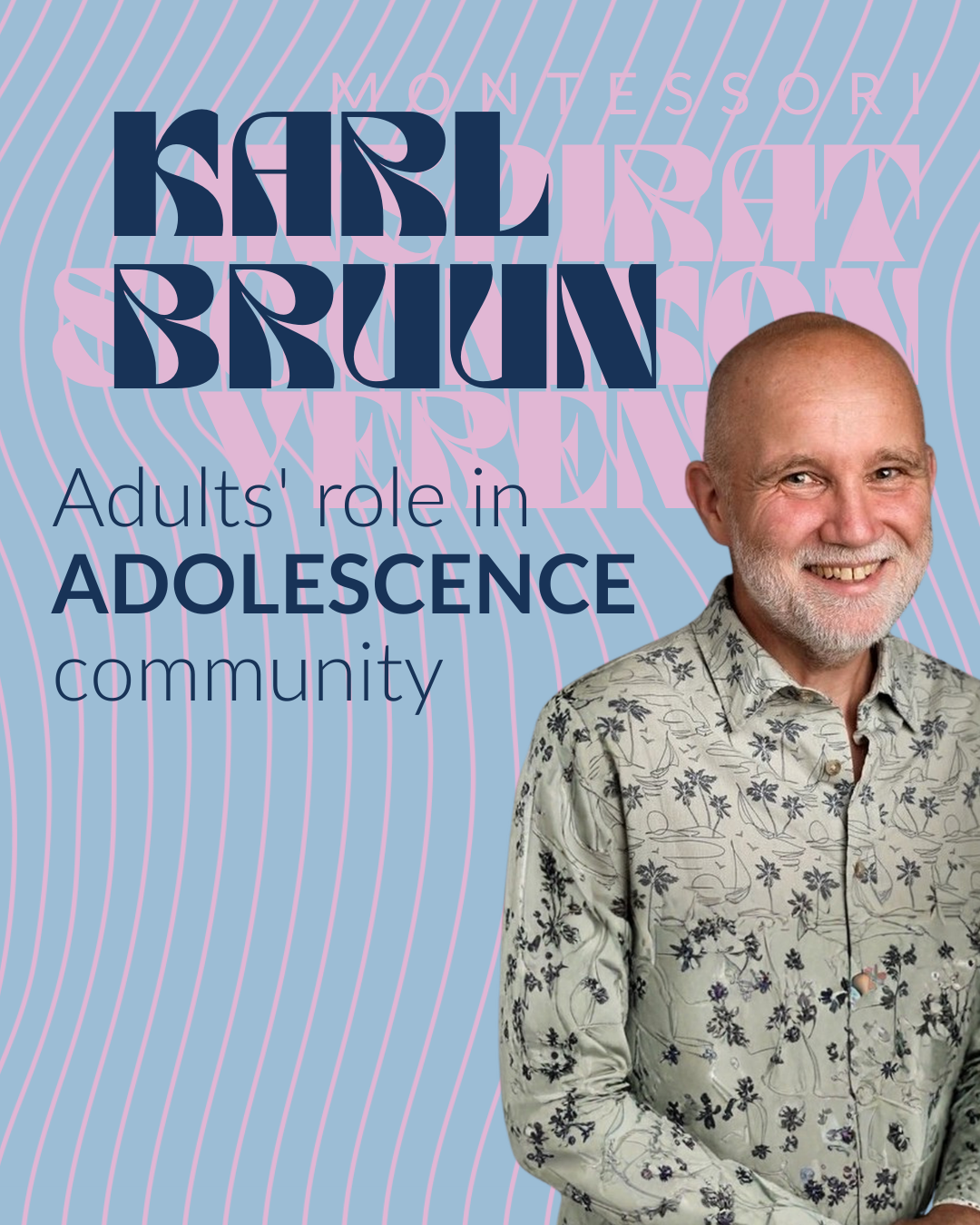
11:00-12:00 Karl Bruun – Adults’ role in adolescence community (12–18 environment) (The presentation is in English language)
Young people need different role models in their environment (including school), and the first part of the presentation opens up the role of adults more generally in working with teenagers and young people. In the second part, the roles of different adults are examined in more detail and why they have developed in the Montessori environment.
12:00-13:00 Lunch break
13:00-14:00 Workshops
Workshops take place simultaneously in different rooms:
- Karl Bruun – Work and Study plan in 12-18 environment (The workshop is in English language)
Participants in the workshop will have the opportunity to view a sample of work and study plan and participate in discussion as a learner or an adult in the 12–18 environment. The workshop will be held in English without translation. - Bo Mynett – Geometry in Montessori 6–12 classroom (The workshop is in English language)
- Ruth Maria Roosi-Ott – Empowering freedom (The workshop is in Estonian language)
All parents and teachers know how important it is to set boundaries, which provide a child with a sense of security and support self-regulation. But how do you ensure that your child has freedom within limits that would be truly empowering? In the workshop, we will talk about the impact of freedom on a child’s development, finding a balance between freedom and boundaries, and practical techniques for providing your child with limited freedom.
14:00-14:30 coffee and vitamin break
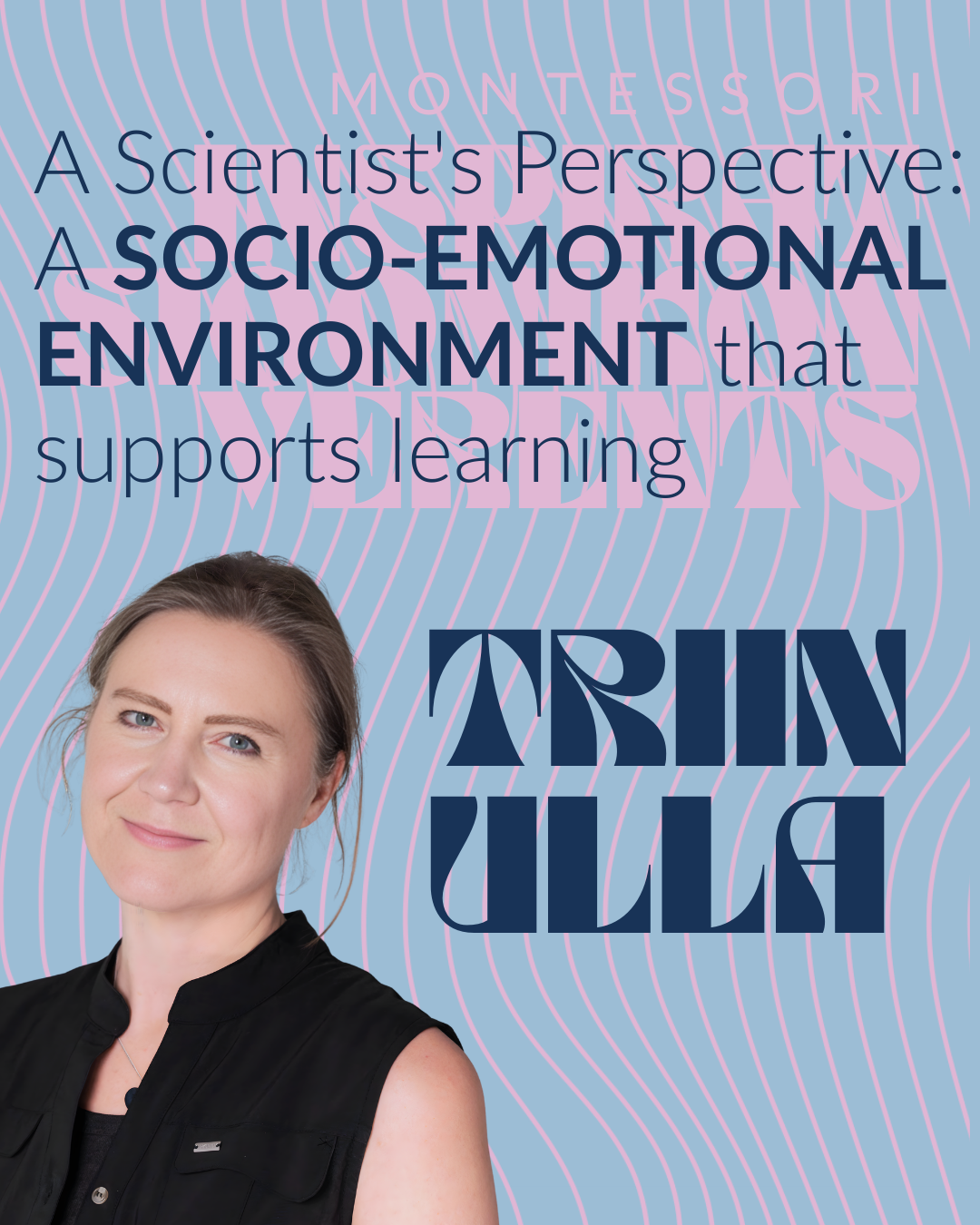
14:30-15:30 Triin Ulla – A Scientist’s Perspective: A socio-emotional environment that supports learning (The presentation will be interpreted into English)
Triin Ulla has focused her research mainly on how a teacher’s conscious development and practices create the prerequisites for the development of children’s socio-emotional skills. Kindergarten and school are not neutral spaces – they are developmental environments with the potential to both build and destroy. Kindergarten and school have a great impact on mental health, self-confidence and opportunities for self-realization. In her presentation, she helps to understand the role of the adult – it is important to talk about the relationships between children (also environment) and how this affects learning and development, and how big the role of the adult actually is in shaping this environment.
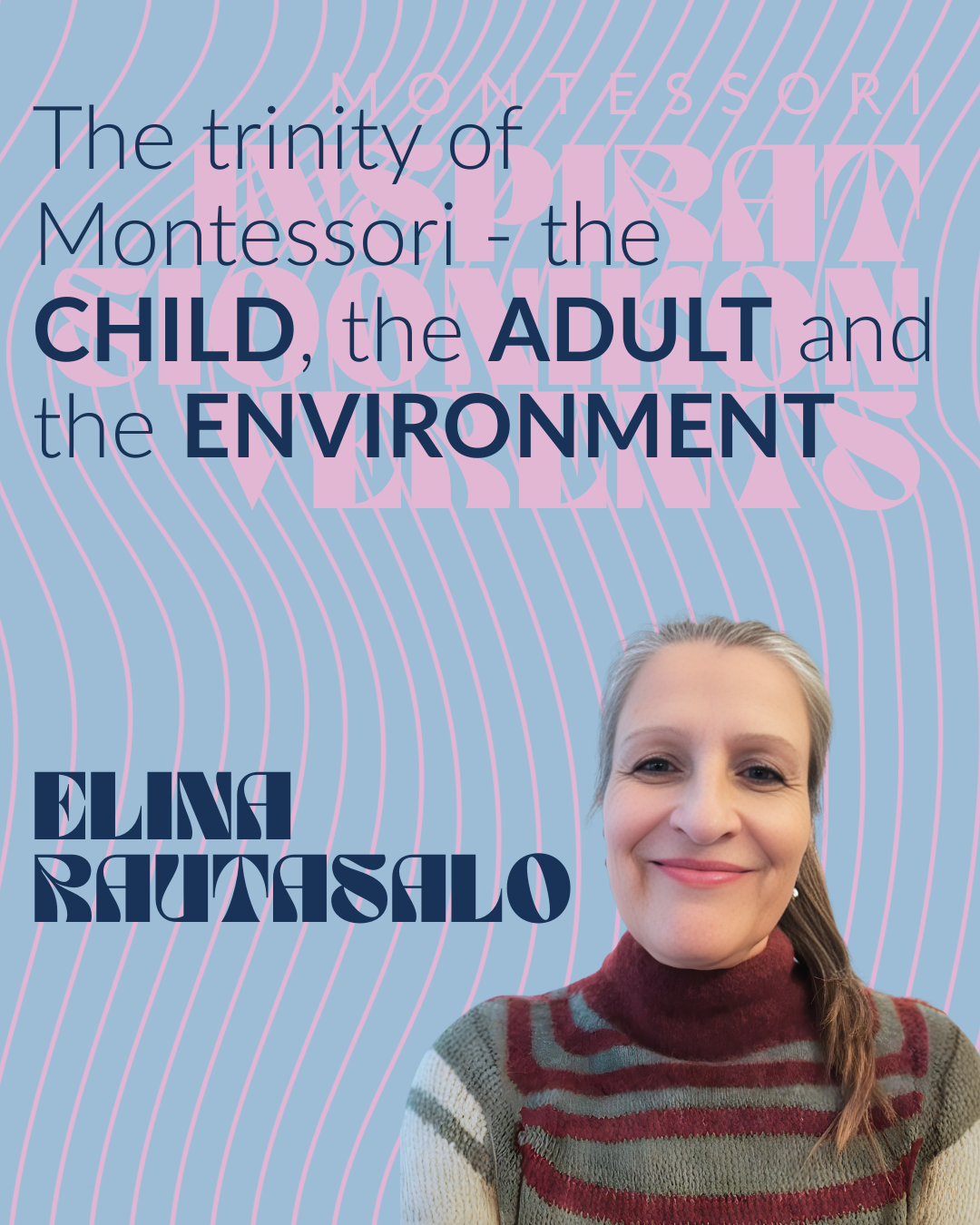
15:30-16:30 Elina Rautasalo – The trinity of Montessori – the child, the adult and the environment (The presentation is in English language)
The conference will be closed by Elina Rautasalo, a AMI 3–6 Teacher Trainer. Her presentation is inspired by the words of M. Montessori “The 1946 London Lectures”: “The adult, the child and the environment are a trinity. They should be treated as one.”
What are the developmental needs of the child during 3–6? How can we as adults assist? What is the role of the environment?
We shall explore what lies behind these essential tenets of Montessori pedagogy and how the child, the adult and the environment form an interconnected entity.